
Our partnership approach
A partnership that moves with your goals.
Every center and community is different. Merritt starts by listening, then brings partners together around a plan for development and long-term management.

Independent partners. Stronger surgery centers.
A PRACTICAL PATH FORWARD
Listen. Align. Build. Manage.
A clear path from your first conversation to ongoing operations. Each partnership is shaped around your goals and the needs of your community.
01
Listen
Understand your community, physicians, service lines and goals.
02
Align
Define the partnership’s ownership, governance and shared priorities.
03
Build
Coordinate feasibility, facility planning, financing and launch.
04
Manage
Support clinical operations, revenue cycle and performance review over time.
Two ways to begin
One partnership.
Different perspectives.
Health systems and physicians bring distinct goals to the ASC conversation. Merritt works with both groups to understand those goals and build a path that fits.
Development and management
Present at every stage.
Merritt’s core work centers on ASC development and management. Consulting can support an existing center, while Merritt Healthcare Advisors provides a separate path for transaction advisory.
01
New centers
Strategy, development planning and launch support.
02
Operating centers
Management, consulting and long-term partnership support.
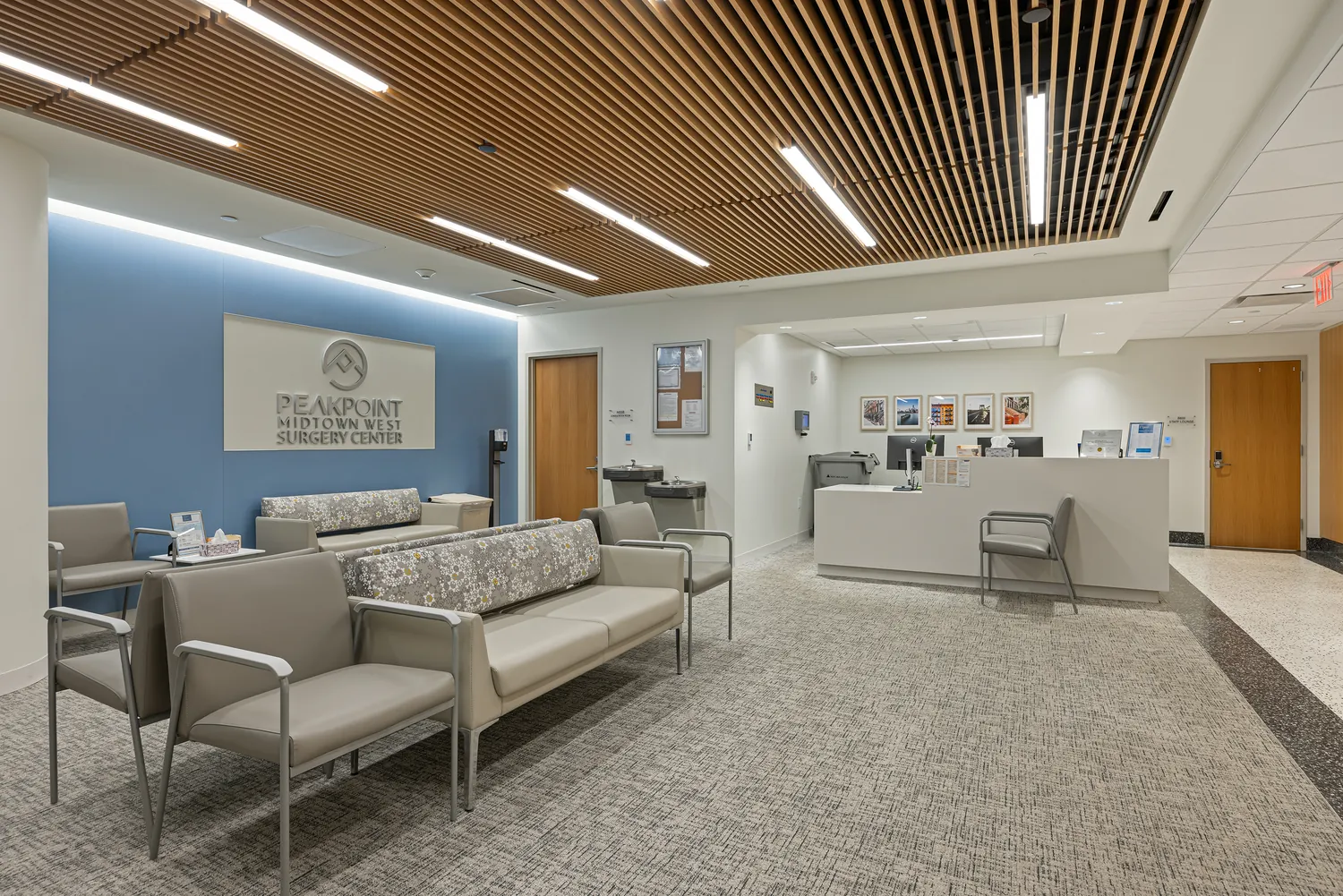
THREE PERSPECTIVES, ONE PLAN
Bring the right voices to the table.
An ASC joint venture works best when the partners make goals, roles and decision-making explicit from the start. The structure is tailored to the people and organizations involved.
01
Health system
Connect outpatient strategy to community access, service lines and the system’s clinical mission.
02
Physicians
Bring clinical priorities, practice workflows and physician participation into the plan.
03
Merritt
Coordinate feasibility, development, operating support and performance reporting with the partners.
Explore ASC development and management or start a partnership conversation.
From feasibility to an operating center
A shared plan can connect market and case-volume analysis with physician goals, facility requirements, financing, payer considerations and regulatory review. The scope and sequence depend on the project and the partners involved.
As a center prepares to open, planning can include staff recruitment, credentialing, policies, equipment and billing workflows. Once operating, partners can review performance, quality and improvement opportunities together. Explore development and conversion planning.
SYSTEM-WIDE ECONOMICS
See the whole-system economics before committing.
An HOPD-to-ASC conversion can change where cases are performed and how contribution is shared. Merritt models the potential impact across the health system so partners can weigh the opportunity and tradeoffs before deciding.
A CONCEPTUAL BRIDGE
From today’s margin to the whole-system picture
The components below are illustrative; the values depend on the center.
01
Starting point
Current hospital outpatient department (HOPD) contribution margin
02
Consider the reduction
Rate compression on cases that migrate to the ASC
03
Account for retained value
Hospital contribution retained from ancillary and downstream services
04
Include the system’s share
The health system’s share of ASC contribution
05
Assess incremental opportunity
Contribution from new volume outside the existing network
06
Understand the result
Estimated net contribution across the health system
WHAT WE MODEL
A decision built on your data.
Merritt’s proposal outlines the inputs used to assess an individual center:
- 24 months of outpatient cases by CPT code, surgeon and payer
- Clinical suitability and eligibility for migration, reviewed with the care team
- HOPD and ASC reimbursement, payer by payer
- Hospital contribution retained and given up, including potential cannibalization
- Potential incremental volume from independent surgeons
- A 10-year pro forma covering capital expenditure, working capital and break-even
The model should distinguish incremental contribution from retained value to avoid double counting.
Illustrative framework only. The direction and size of the result depend on clinical suitability, case mix, reimbursement, costs, ownership and project-specific assumptions; improvement is not guaranteed.
Explore HOPD conversion planning ↗ Explore joint-venture planning ↗